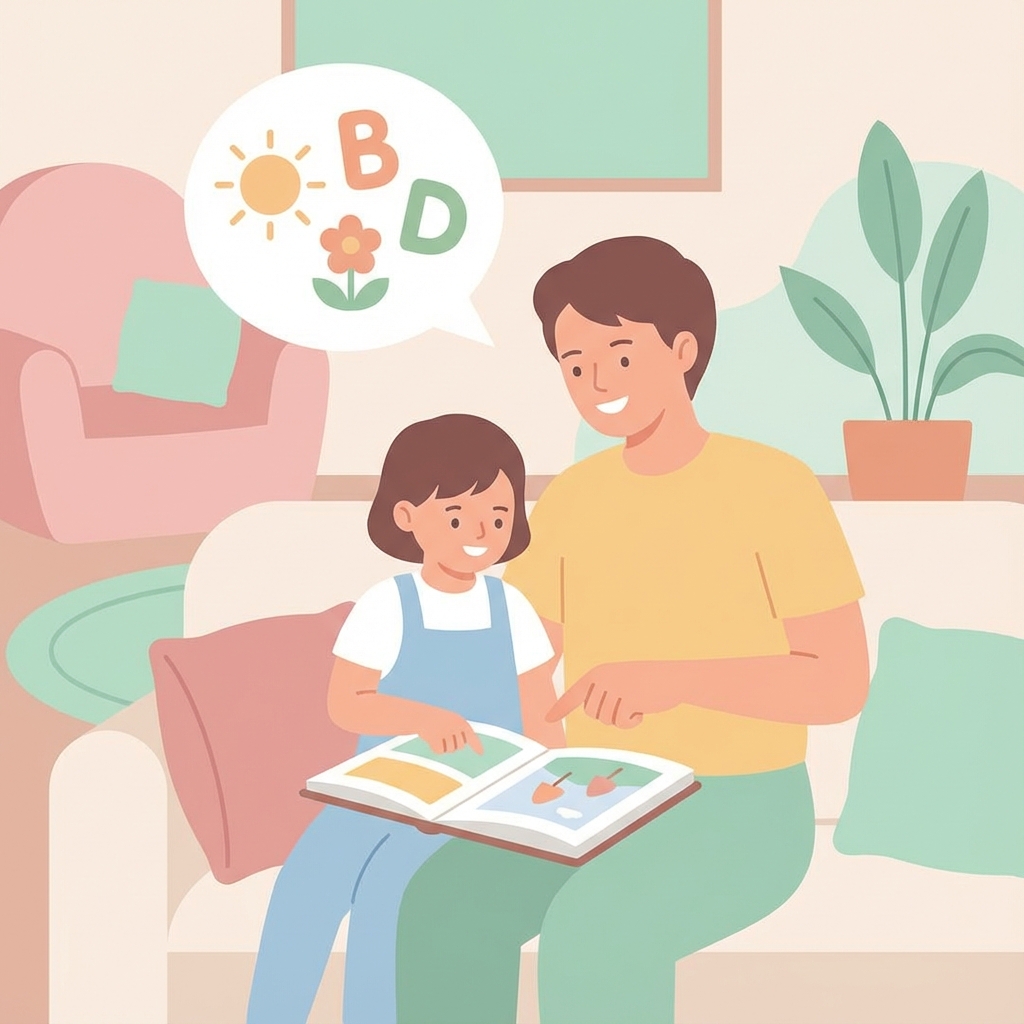
If you're worried that your toddler isn't talking as much as other children their age, you are not alone — and you're already doing the most important thing by paying attention. Speech and language delays are among the most common developmental concerns parents raise, and they're also among the most treatable when caught early. This guide walks you through what's typical at each age, the signs worth watching, and exactly what to do next.
The short answer: Every child develops at their own pace, but there are well-established speech and language milestones for each age. If your child isn't babbling by 12 months, isn't using single words by 16 months, or isn't putting two words together by 24 months — or if they lose words they used to say — talk to your pediatrician and ask about a free Early Intervention evaluation. You never need a referral or a diagnosis to request one.
Speech delay vs. language delay: what's the difference?
These terms are often used interchangeably, but they describe different things, and the distinction helps a specialist know where to focus:
- Speech is the physical act of producing sounds and words. A child with a speech delay may understand language well but struggle to be understood.
- Language is understanding and using words to communicate — both expressive (talking) and receptive (understanding). A child with a language delay may have trouble following directions, naming objects, or combining words.
Many children have a mix of both. A speech-language pathologist (SLP) can tease apart which areas need support — which is exactly what an evaluation is for.
Speech and language milestones by age
Use this table as a general guide. Reaching most — not necessarily all — milestones for an age is what matters. You can also track your child's milestones with our free checker.
| Age | What most children do |
|---|---|
| 6 months | Babbles ("ba", "da"), laughs, responds to sounds and their name |
| 9 months | Babbles long strings of sounds, copies sounds and gestures, understands "no" |
| 12 months | Says one or two words ("mama", "dada"), waves, points, uses gestures |
| 18 months | Says several single words, points to things they want, follows simple directions |
| 24 months | Uses 2-word phrases ("more milk"), has ~50 words, is understood about half the time |
| 36 months | Speaks in short sentences, is understood most of the time by familiar adults |
Want the full checklist for your child's age? See our detailed pages for 18 months, 2 years, and 3 years.
Signs of a possible speech or language delay
By 12 months
- Isn't babbling or experimenting with sounds like "p", "b", and "m"
- Doesn't use gestures such as waving "bye-bye" or pointing
- Doesn't respond to their name or familiar sounds
By 18 months
- Isn't saying any single words
- Prefers gestures over vocalizing to communicate
- Has trouble imitating sounds or understanding simple requests
By 24 months
- Says fewer than about 50 words
- Isn't combining two words ("want up", "more juice")
- Can only imitate speech rather than producing words spontaneously
- Is difficult for familiar caregivers to understand
What causes speech delays?
There isn't always a single cause, and sometimes a "late talker" simply catches up. Common contributing factors include:
- Hearing problems. Even temporary hearing loss from frequent ear infections can affect speech. A hearing check is usually one of the first steps. (See our guide on signs of hearing loss.)
- Oral-motor issues affecting the coordination of the lips, tongue, and jaw.
- Developmental differences such as autism spectrum disorder, where language often develops differently. (See early signs of autism.)
- Limited language exposure or, in bilingual homes, a normal mixing phase that is not itself a disorder.
When to talk to your doctor right away
Contact your pediatrician promptly if your child:
- Loses speech or social skills they once had at any age
- Isn't babbling or using gestures by 12 months
- Isn't saying single words by 16 months
- Isn't using two-word phrases by 24 months
- Is hard to understand for their age, or seems frustrated trying to communicate
Trust your instincts. You know your child best, and acting early makes a meaningful difference.
How to get help: free Early Intervention
Every U.S. state offers a free Early Intervention (EI) program for children from birth to age 3, regardless of income or insurance. You can request an evaluation yourself — no doctor's referral or diagnosis is required. If your child qualifies, services like speech therapy are provided at little or no cost, often right in your home. After age 3, your local school district takes over evaluations.
EarlyBegin can guide you through the whole process and create a personalized action plan in minutes.
How speech therapy helps
A speech-language pathologist uses play-based activities tailored to your child — modeling sounds, building vocabulary, and coaching you on techniques to use during everyday routines. Parents are a central part of therapy, because the most powerful practice happens in daily life, not just in sessions.
What you can do at home today
- Narrate your day. Describe what you're doing ("I'm washing the red apple") to flood your child with language.
- Follow their lead. Talk about whatever they're looking at or playing with.
- Pause and wait. Give your child time to respond instead of filling every silence.
- Read together every day. Point to pictures and name them.
- Expand on their words. If they say "dog", you say "Yes, a big brown dog!"
- Limit screen time. Real back-and-forth conversation builds language far better than screens.
Frequently asked questions
Is my child just a "late talker"?
Some children talk later and catch up on their own. But there's no reliable way to know in advance who will catch up and who needs support — and early help never hurts. An evaluation gives you a clear answer.
Does being bilingual cause speech delays?
No. Growing up with two languages does not cause a delay. Bilingual children may mix languages early on, which is a normal part of the process.
Will my child need speech therapy forever?
Usually not. Many children make excellent progress with early, targeted support and "graduate" from therapy. The earlier it starts, the better the outcomes tend to be.
How much does an evaluation cost?
Early Intervention evaluations are free in every U.S. state for children under 3.
Common myths about speech delays
Myth: "Boys talk later, so I shouldn't worry." While there's a small average difference, "boys are just slower" is not a reason to delay an evaluation. The milestones above apply to all children.
Myth: "They'll grow out of it." Some children do catch up — but you can't predict which ones, and early support carries no downside. Waiting can mean missing the window when intervention is most effective.
Myth: "Using a pacifier or bottle causes speech delay." Prolonged, all-day pacifier use can affect mouth development over time, but it isn't a primary cause of delay. Focus on rich, back-and-forth talk.
Myth: "I should make my child say the word before giving them what they want." Pressuring a struggling child can backfire. Modeling words and celebrating any attempt works far better than withholding.
What to expect at your child's evaluation
A speech and language evaluation is relaxed and play-based — there's nothing to prepare for. A speech-language pathologist will play with your child, listen to the sounds and words they use, and check how well they understand language. They'll also ask you about what you hear at home, since your child often communicates most freely with you. Because hearing and speech are closely linked, a hearing screening is usually part of the process. You'll leave with a clear picture of your child's strengths, any areas of concern, and a plan — which may include therapy, monitoring, or simple strategies to use at home.
The bottom line
Speech and language delays are common, and early support is highly effective. If anything in this guide sounds familiar, the next step is simple and free. Check your child's milestones, then start your personalized action plan — you don't need to wait for a diagnosis to get help.
Check your child's milestones · Start your free action plan
Sources: U.S. Centers for Disease Control and Prevention (CDC), "Learn the Signs. Act Early."; American Speech-Language-Hearing Association (ASHA); American Academy of Pediatrics (AAP). This article is for educational purposes and is not a substitute for professional medical advice. If you have concerns about your child's development, talk to your pediatrician.