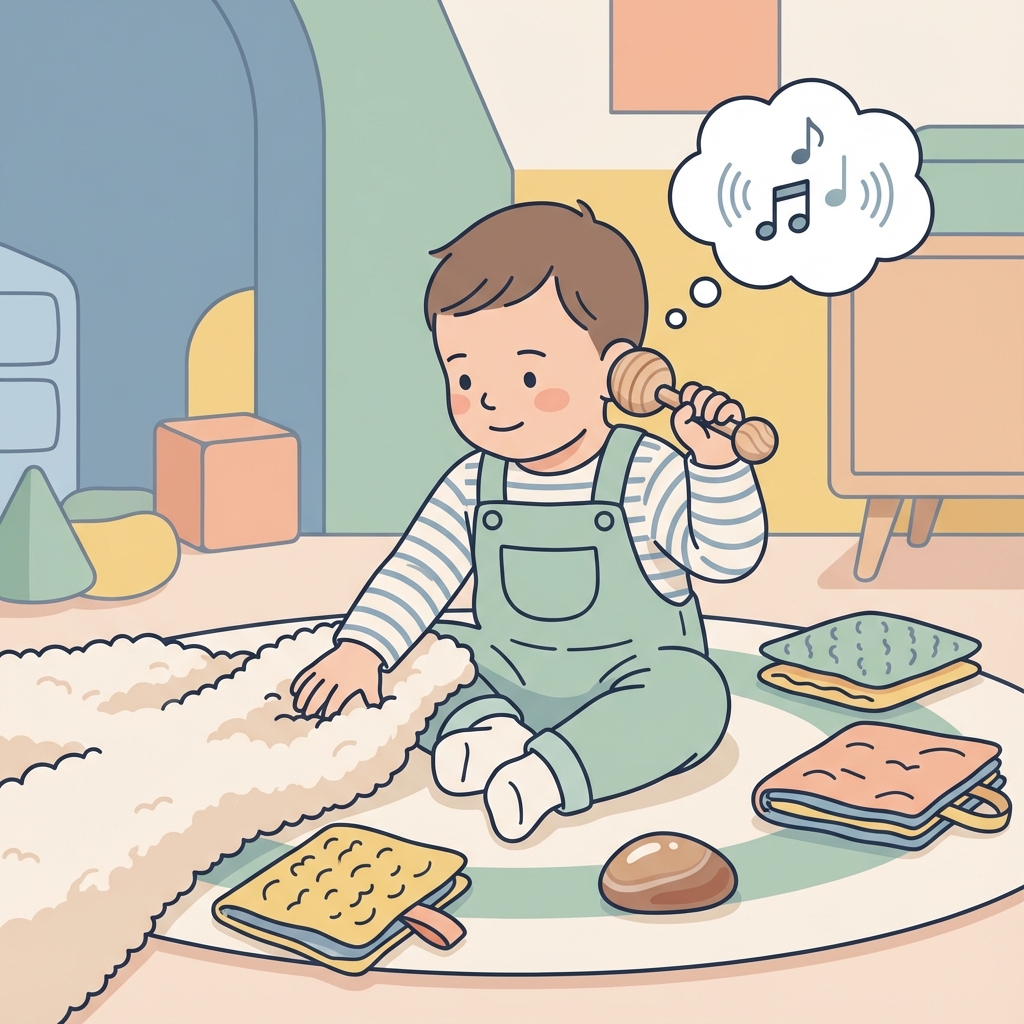
Does your child melt down over a clothing tag, cover their ears at the vacuum, or crash into everything like a little tornado? Children take in the world through their senses, and some experience those senses more intensely — or seek them out more — than others. This guide explains sensory processing differences, the signs to watch for, and how to help your child feel more comfortable and regulated.
The short answer: Sensory processing is how the brain takes in and responds to sensory information (sound, touch, movement, taste, and more). Many children have sensory quirks; it becomes a concern when sensory responses regularly interfere with daily life, play, sleep, or learning. An occupational therapist (OT) can evaluate and help — often through free Early Intervention.
What is sensory processing?
Every moment, your child's brain is processing input from their senses — not just the familiar five (sight, sound, touch, taste, smell) but also movement (vestibular) and body awareness (proprioception). When this processing works smoothly, a child can stay comfortable and focused. When it doesn't, everyday sensations can feel overwhelming, underwhelming, or hard to interpret.
Common signs of sensory processing differences
Over-responsive ("sensory avoiding")
- Covers ears at everyday sounds; very upset by vacuums, hand dryers, or crowds
- Hates certain textures — clothing tags, seams, messy hands, or grass
- Picky with food textures; gags easily
- Dislikes being touched unexpectedly, or hates haircuts, nail trims, and baths
Under-responsive or "sensory seeking"
- Constantly moving, crashing, jumping, or spinning
- Seeks deep pressure — tight hugs, squeezing into small spaces
- Chews on objects or clothing; mouths things past the typical age
- Doesn't seem to notice bumps, falls, or messy face/hands
Movement and coordination
- Seems clumsy or bumps into things often
- Avoids playground equipment, swings, or being upside down — or can't get enough of them
- Tires quickly or has unusually low or high energy
Is it a phase or a real concern?
Most young children have some sensory preferences — that's normal. The question OTs ask is whether sensory responses regularly get in the way: Do they limit what foods your child eats, where you can go as a family, how your child sleeps, or their ability to play and learn? Frequent, intense interference is the signal to seek an evaluation. Sensory differences also commonly occur alongside autism, though many children with sensory needs are not autistic.
How an occupational therapist helps
An OT evaluates how your child processes sensory input and creates a personalized plan — often a playful "sensory diet" of activities that help your child stay regulated (calm and ready to engage). The goal is to help your child participate comfortably in everyday life: getting dressed, eating, playing, and sleeping.
How to get help
Free Early Intervention (birth to age 3) can evaluate sensory and developmental concerns and provide occupational therapy — you can request an evaluation yourself, with no referral or diagnosis required. After age 3, your school district and pediatrician can guide next steps.
Calming strategies you can try at home
- Offer deep pressure — firm hugs, a weighted lap pad, or "squishing" under cushions — which many children find calming.
- Build in heavy-work play: pushing, pulling, carrying, climbing, and jumping help regulate the nervous system.
- Prepare for tough moments. Bring ear protection to loud places; warn before haircuts or nail trims.
- Respect texture sensitivities while gently expanding comfort over time.
- Create a calm-down space with soft, low-stimulation items.
- Keep routines predictable to reduce sensory surprises.
Frequently asked questions
Is "sensory processing disorder" an official diagnosis?
Sensory processing challenges are widely recognized and treated by occupational therapists, though they're not a standalone diagnosis in every medical manual. Either way, support can genuinely help your child.
My child only struggles with food textures — is that sensory?
It can be. Texture-based picky eating often has a sensory component. See our guide on feeding difficulties.
Will my child grow out of it?
Many children learn to manage sensory needs well, especially with support and strategies. Early help builds skills and reduces daily stress for the whole family.
The bottom line
Sensory differences are common and very manageable. If your child's reactions to sounds, textures, or movement regularly disrupt daily life, an occupational therapy evaluation — free through Early Intervention — can make everyday life calmer for everyone.
Check your child's milestones · Start your free action plan
Sources: American Occupational Therapy Association (AOTA); American Academy of Pediatrics (AAP); STAR Institute for Sensory Processing. This article is for educational purposes and is not a substitute for professional medical advice. If you have concerns about your child's development, talk to your pediatrician.